Guide
Water filter bottles in the UK: which kind suits your water
Which filter bottle suits you depends first on where the water comes from. For mains tap water, a taste filter such as the BRITA Vital is enough. For uncertain outdoor or travel water, a taste filter is not sufficient: match the exact model’s documented treatment performance and instructions to the source. Compared here: BRITA Vital, LifeStraw Go Series, GRAYL UltraPress and Water-to-Go.
Desk research from the makers’ own pages and the reports they publish; we haven’t tested these bottles ourselves.
Start with the water
Two very different jobs get sold under the same name. A taste filter makes mains tap water nicer to drink. A bottle with a documented germ-treatment claim is meant for uncertain water, and the claim has to match your source. Pick the job first, then the bottle.
For mains drinking water with no local advisory, taste is usually the issue. Private supplies and boil-water notices are different cases, and a taste filter doesn’t solve them. Away from a tap the water might be anything, so what the exact model is documented to handle matters more than its colour or size. For filters in a kitchen rather than a bottle, see the countertop guide and the under-sink guide.
Four bottles side by side
These are the makers’ own figures for one exact model of each family. Sizes and filters differ between versions, so check the exact product before you buy.
| Bottle | Size | Listed weight | About this much full | Filter life (maker) | What the maker claims | UK price |
|---|---|---|---|---|---|---|
| BRITA Vital | 600 ml | 176 g | 776 g | MicroDisc: up to 60 litres or 4 weeks | Reduces chlorine and improves taste. The maker does not present it as a microbial purifier. | Not shown: unavailable on the official shop when checked |
| Water-to-Go EcoActive | 750 ml | 138 g | 888 g | One filter: rated for up to 200 litres, a volume limit rather than a date | The maker markets microbial reduction, including viruses. The 2021 BCS report’s virus result missed the NSF P231 requirement. Read the finding | £39.95 for the bottle, excluding delivery |
| LifeStraw Go Series | 650 ml | 247 g | 897 g | Membrane: up to 4,000 litres. Carbon: 100 litres, about 2 months | The maker states it reduces bacteria and parasites. It does not claim viruses. | Not checked for the UK |
| GRAYL UltraPress | 500 ml | 354 g | 854 g | Cartridge: 300 presses (150 litres) or 3 years after first use, or earlier if pressing takes about 25 seconds | The maker states it reduces viruses, bacteria and protozoa. | Not checked for the UK |
Affiliate disclosure. We may earn a commission if you buy through a link marked Affiliate link. This does not change the price you pay. Only the Water-to-Go button is an affiliate link here; the other makers’ links go straight to them.
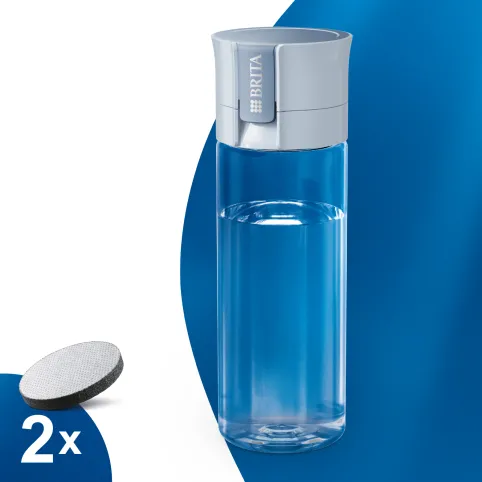
Taste filter for mains tap water
BRITA Vital 600 ml
Reduces chlorine and improves taste. The maker does not present it as a microbial purifier.
Filter life: MicroDisc: up to 60 litres or 4 weeks.
Photo: BRITA
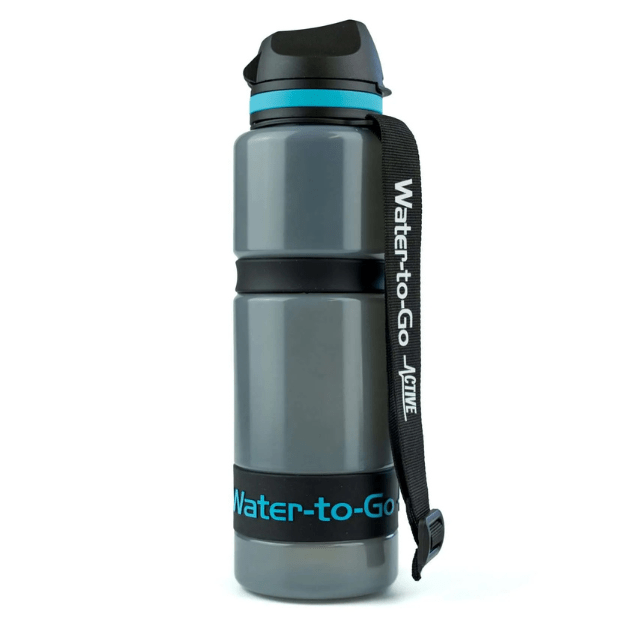
Filter bottle sold for tap, travel and outdoor use
Water-to-Go EcoActive 750 ml
The maker markets microbial reduction, including viruses. The 2021 BCS report’s virus result missed the NSF P231 requirement. Read the finding
Filter life: One filter: rated for up to 200 litres, a volume limit rather than a date.
Affiliate offer: code WTGAW20 for 20% off at checkout. Terms and details.
See the 750 ml at Water-to-Go Affiliate link
Photo: Water-to-Go
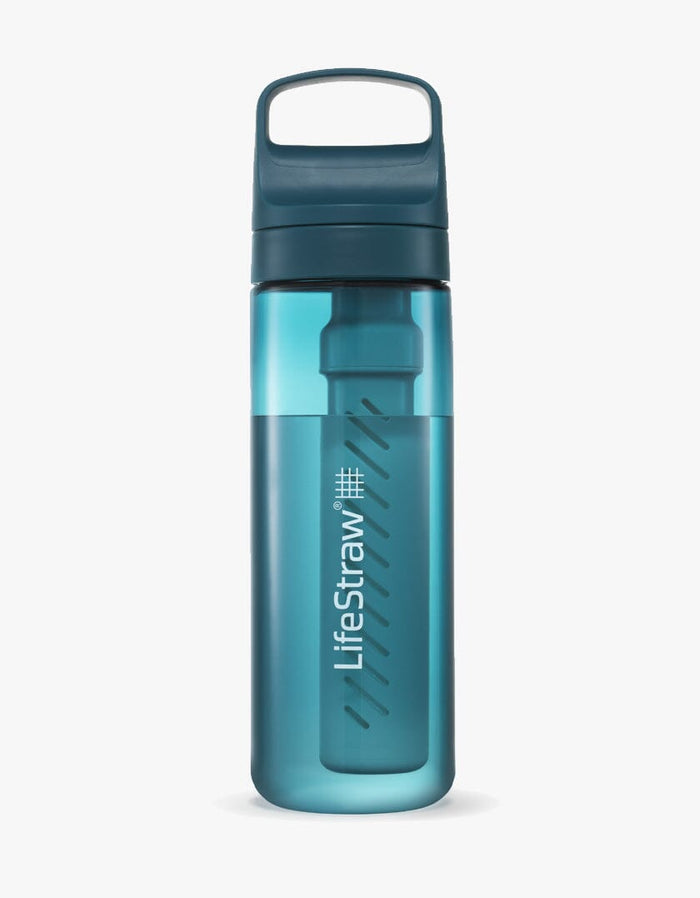
Bottle with a membrane filter and a carbon filter
LifeStraw Go Series 650 ml
The maker states it reduces bacteria and parasites. It does not claim viruses.
Filter life: Membrane: up to 4,000 litres. Carbon: 100 litres, about 2 months.
See the Go Series at LifeStraw
Photo: LifeStraw
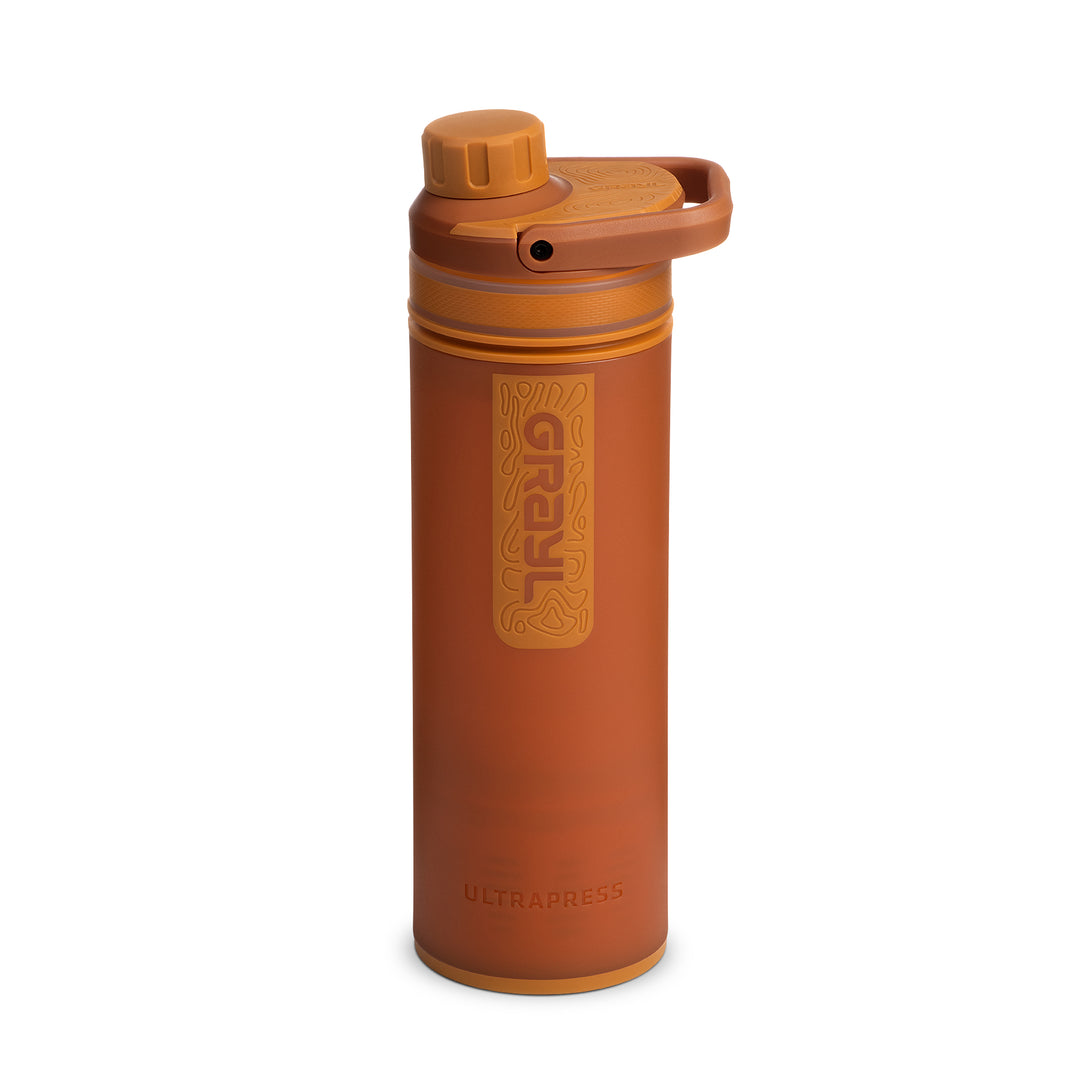
Press-style bottle with a replaceable cartridge
GRAYL UltraPress 500 ml
The maker states it reduces viruses, bacteria and protozoa.
Filter life: Cartridge: 300 presses (150 litres) or 3 years after first use, or earlier if pressing takes about 25 seconds.
Photo: GRAYL
The four, one by one
BRITA Vital, 600 ml
A taste bottle for mains tap water. Its MicroDisc is listed for up to 60 litres or 4 weeks, so anyone drinking under about two litres a day reaches the four-week limit first. BRITA’s manual asks you to take the filter out when you clean the bottle, and to use the filtered water within a day. The Vital was unavailable on BRITA’s official shop when we looked, so we show no price. The litre figures on BRITA’s jug cartridges don’t carry over to this disc.
Water-to-Go EcoActive
The EcoActive range comes in three sizes and uses filters rated for up to 200 litres. We cover the sizes, prices, filter costs and care on the Water-to-Go bottles page. The short version of the testing: a 2021 BCS Laboratories report that Water-to-Go links found its bacteria and cyst-surrogate results met NSF P231 at the tested point, but virus reduction (about 99.97 to 99.98%) did not meet that protocol’s virus requirement. An older 2013 London School of Hygiene report gives above 99.9% for a polio vaccine strain under laboratory conditions. Neither shows how today’s filter performs, so we don’t treat the bottle as proven virus protection.
LifeStraw Go Series, 650 ml
Two filters work together: a membrane rated for up to 4,000 litres and a carbon filter rated for 100 litres, about two months. Each has its own life, and the carbon part sets the pace. The maker states it reduces bacteria and parasites, and its own help page says the Go Series is not for viruses. The maker says it meets the EPA/NSF P231 protocol for bacteria and parasites; we haven’t checked a certification registry, so treat that as its statement rather than a listing. Older bottles used a flip-straw that presses in; newer ones have a twist mouthpiece that screws in, so buy the replacement made for your exact Go Series. We haven’t checked a UK price, and the US page’s dollar prices don’t apply here.
GRAYL UltraPress, 500 ml
You fill the outer bottle, then press the inner cartridge down; the maker estimates about ten seconds a fill. The cartridge is rated for 300 presses (150 litres) or three years after first use, or earlier if pressing takes about 25 seconds, following the maker’s instructions. The maker states it reduces viruses, bacteria and protozoa; we haven’t checked those claims against a laboratory report or a certification listing. GRAYL says to avoid salty or brackish water, industrial contamination and toxic blue-green algae, and the bottle is not a way to make seawater drinkable. We haven’t checked a UK price.
Size and weight
A litre of water weighs about a kilogram, so the water outweighs most bottles. The chart adds each bottle’s listed weight to a full measure of water, counted at one gram a millilitre.
The GRAYL’s 354 g is more than twice the Water-to-Go 750 ml’s 138 g. Makers list weight on different bases, such as with or without the filter fitted, so use the figures to compare roughly, not to the gram.
Sip, squeeze or press
How the water gets through the filter changes how a bottle feels to use. When the filter sits at the mouthpiece, as with the LifeStraw’s straw, you do the work with every sip. A press design such as the GRAYL does the work in one go before you drink, at the cost of a firm surface and a few seconds a fill. BRITA filters as you drink; we have not measured sipping resistance for these bottles.
A mouthpiece you put in your mouth should not then go into the water you are collecting: that can carry germs back onto the clean side. Follow each maker’s instructions for which part goes where.
Filters, cleaning and storage
- BRITA Vital: change the MicroDisc at 60 litres or 4 weeks, whichever comes first; clean regularly with the filter removed.
- LifeStraw Go Series: two parts on two schedules; make sure the replacement matches your version.
- GRAYL UltraPress: one cartridge, 300 presses or three years after first use, or earlier if pressing takes about 25 seconds.
- Water-to-Go: one filter rated for up to 200 litres. Prices, per-litre costs and care steps are on the Water-to-Go page.
For how change dates work in general, see water filter replacement, and for adding replacements into a yearly figure, the running-cost calculator.
What the claims cover, and what they don’t
- A maker’s statement is not a certificate. We haven’t verified any of the germ claims above. How to check a certificate.
- Reports describe the samples tested. A result for one batch under lab conditions doesn’t cover every bottle, or one near the end of its life.
- Taste and smell cannot confirm that water is free of harmful microbes.
- Check the water before the bottle. Salty, chemical or algae-affected water is outside what these bottles are built for.
Common questions
Is tap water or river water the right thing to put in?
Mains tap water with no local advisory suits any of these bottles, and a taste filter is enough. River, lake or stream water is untreated: match the exact model’s documented treatment performance and instructions to that source. A taste filter is not sufficient.
Do these bottles handle viruses?
It differs by bottle. The LifeStraw Go Series is not claimed for viruses. The GRAYL’s maker states viruses are covered. Water-to-Go markets virus reduction, but its 2021 BCS report recorded a virus result that did not meet the protocol’s requirement. The full finding. The BRITA Vital is not a germ filter.
Can a filter bottle turn seawater into drinking water?
No. A bottle filter isn’t a desalinator, and GRAYL says to avoid salty and brackish water.
Will a filter bottle stop limescale?
These bottles are chosen for taste or for germs, not as water softeners. For limescale at home, read hard water and limescale.
How long does a filter last?
By the maker’s own figure: 60 litres or 4 weeks for the BRITA disc, 100 litres or about two months for the LifeStraw carbon filter, 150 litres or three years for the GRAYL cartridge (sooner if pressing takes about 25 seconds), and up to 200 litres for a Water-to-Go filter. Whichever limit arrives first is the one to follow.
What about at home every day?
A bottle is made for carrying. For a family’s drinking water in the kitchen, a countertop or under-sink filter is a better fit, and our under-sink comparison puts specific systems side by side.
Before you buy
- Where will the water come from, and is this exact model documented for that kind of water?
- Which germs does the maker name, and is there a report or certificate for this exact version?
- What does the replacement cost, what is its limit in litres and in time, and does it match your version of the bottle?
- What does it weigh full, and how will you carry it?
Where the figures come from
Read on 16 October 2026 from the makers’ own pages. Sources and photo credits are plain links.
- BRITA: Vital filter bottle
- BRITA: Vital instruction manual (PDF)
- LifeStraw: Go Series 650 ml
- LifeStraw: Go Series and international travel
- GRAYL: UltraPress 500 ml
- Water-to-Go: FAQ
- BCS Laboratories report, 27 May 2021 (PDF, hosted by Water-to-Go)
- London School of Hygiene & Tropical Medicine report, 8 May 2013 (PDF, hosted by Water-to-Go)
Prices and stock change; check the maker’s page before you buy. How we check.